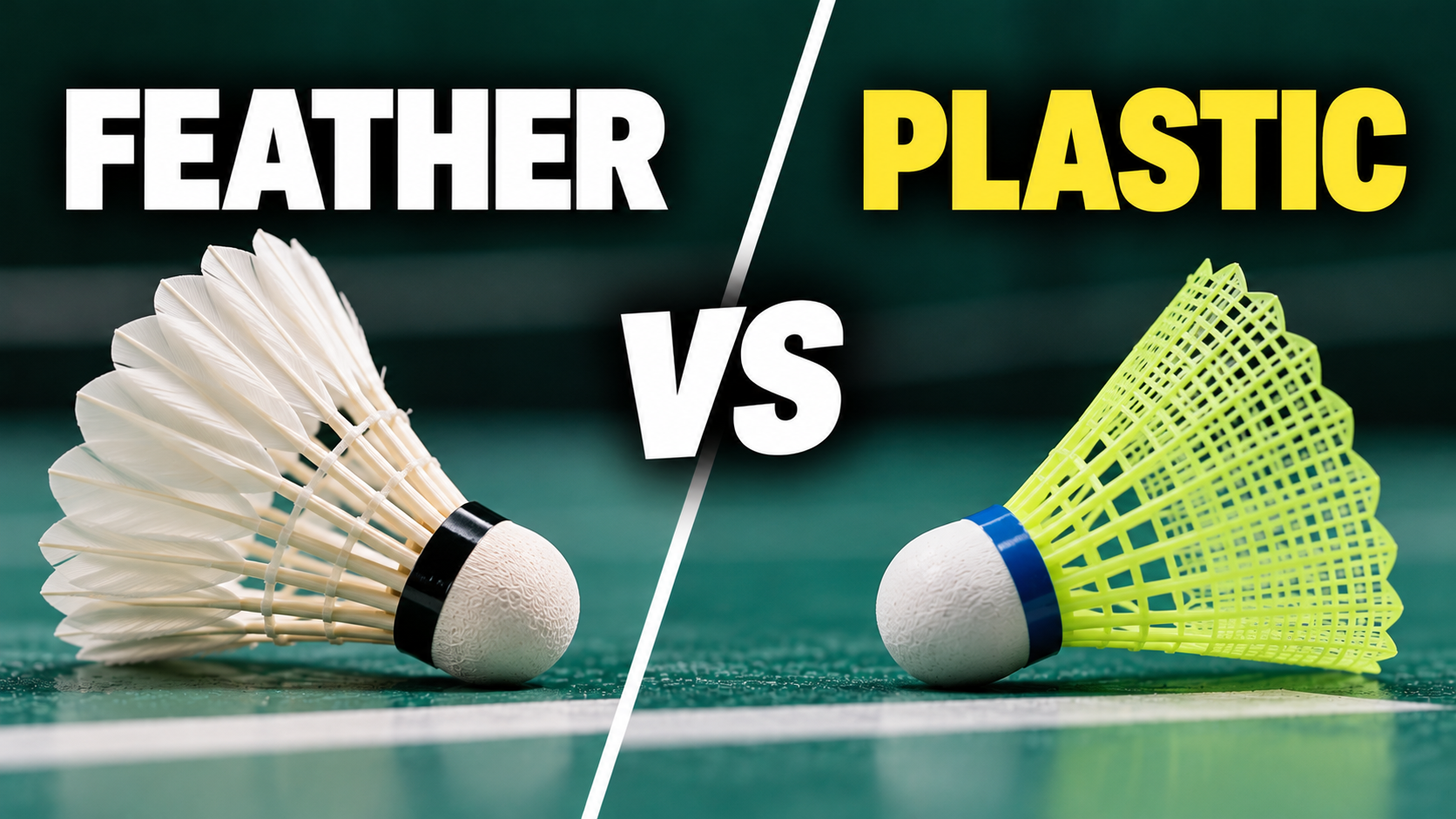

If you’ve played badminton at a local court, you’ve probably used a plastic shuttlecock. Walk into a serious badminton academy or tournament, however, and you’ll usually find players using feather shuttles.
So, what’s the actual difference? Are feather shuttlecocks worth the extra money, or are plastic ones good enough for regular players?
The answer depends on your playing level, budget and what you want from your game.
Also Read: Players share mixed reactions to proposed 15-point badminton scoring system
1. Feather vs plastic shuttlecocks: What’s the difference?
Feather shuttlecocks typically have 16 natural feathers fixed to a cork base. Their construction produces the distinctive flight pattern that competitive badminton players train with.
Plastic or nylon shuttlecocks use a synthetic skirt attached to a base. They’re generally more durable and economical, making them popular for casual games, beginners and outdoor play.
Both types are permitted under badminton’s laws, although specific tournaments determine which shuttlecocks are approved for competition. (BWF Laws of Badminton)
2. Which shuttlecock flies better?
For competitive badminton, feather shuttlecocks generally offer the more familiar flight and feel.
After a powerful smash or clear, a feather shuttle decelerates sharply through the air. This helps create the fast attacks, steep drops and precise net shots that players practise.
Plastic shuttlecocks can have a different flight trajectory and response. Players accustomed to feathers may find their timing and shot selection need adjustment when switching between the two.
That doesn’t make plastic shuttles unsuitable. They’re perfectly useful for learning the basics and enjoying recreational games, but the differences become more noticeable as players develop their technique.
3. Which lasts longer?
Plastic shuttlecocks generally win on durability.
Natural feathers can bend, split or break after repeated impacts, particularly during hard rallies and off-centre hits. Once the feather structure is damaged, the shuttle may wobble or fly inconsistently.
Plastic shuttles can withstand repeated hits without suffering the same kind of feather damage. However, their skirts can still deform or crack, and they won’t last forever.
If you’re playing several times a week, the cost of replacing feather shuttles can add up quickly.
4. Which is cheaper?
Plastic shuttlecocks are usually the more economical choice for regular recreational play because they tend to last longer.
Feather shuttles cost more per shuttle and may need frequent replacement during intensive sessions. However, serious players often consider the expense worthwhile because consistent flight is essential for practising realistic match situations.
For beginners, buying expensive feather shuttles before developing basic strokes may not be necessary. A decent synthetic shuttle can provide plenty of practice at a lower cost.
5. Which one should you buy?
| Your playing level or purpose | Recommended shuttle |
|---|---|
| Complete beginner | Plastic or nylon |
| Casual weekend games | Plastic or nylon |
| Regular intermediate training | Feather, if affordable |
| Competitive match preparation | Feather |
| Outdoor recreational badminton | Plastic or nylon |
These are general recommendations, not strict rules. Your choice should also depend on the quality of the particular shuttle, your budget and where you play.
6. Are synthetic shuttlecocks the future of badminton?
This is becoming an increasingly important question. In April 2026, the Badminton World Federation approved trials of synthetic shuttlecocks from Victor and Yonex at selected Grade 3 and Junior International tournaments.
The aim is to assess their flight characteristics, durability and performance in competitive conditions. The initiative also reflects concerns about the cost and supply of natural-feather shuttlecocks.
However, these trials don’t mean synthetic shuttles have replaced feather shuttles at elite tournaments. More performance data and player feedback are needed before wider adoption can be assessed.
Final verdict
For casual badminton, plastic shuttlecocks offer excellent value and durability. For competitive training, feather shuttlecocks remain the familiar choice because of their distinctive flight and response.
If you’re a beginner, start with a good synthetic shuttle. As your technique improves and you begin playing competitive matches, try feather shuttles to understand the difference.
Ultimately, the best shuttlecock is one that suits your level, playing conditions and budget.
Read Next: I Played Tennis as a Badminton Player. Here’s What Surprised Me!
Discussion
0 CommentsShare your thoughts — every perspective adds value.