
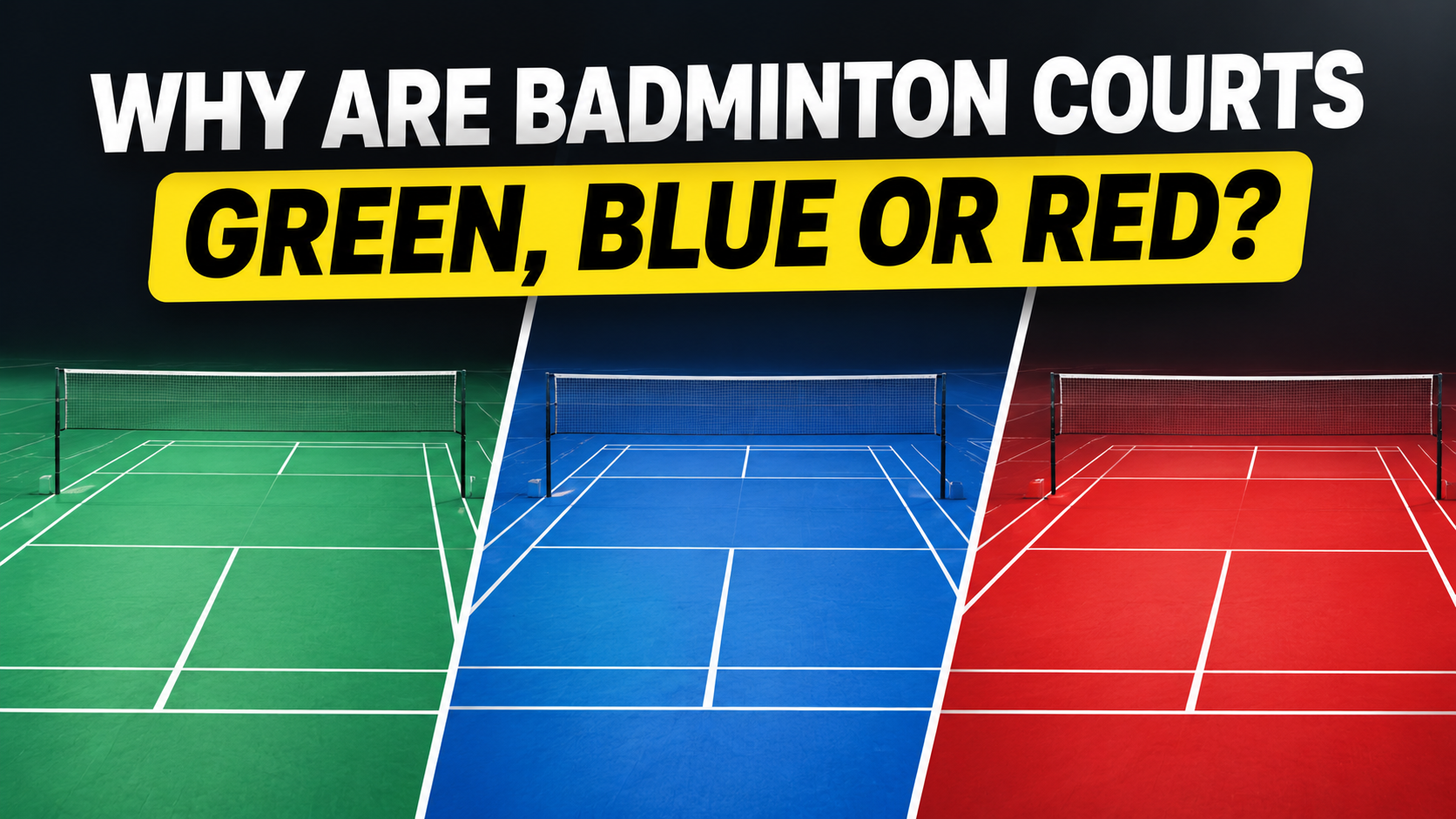

Have you ever noticed that badminton courts aren’t always the same colour? Most professional tournaments feature green or blue courts, while some competitions have experimented with striking red surfaces.
But is there a reason behind these choices? Does the colour affect how players see the shuttlecock? And does the Badminton World Federation (BWF) have rules about which colours can be used?
The answer is more interesting than you might expect.
1. The biggest reason: shuttlecock visibility
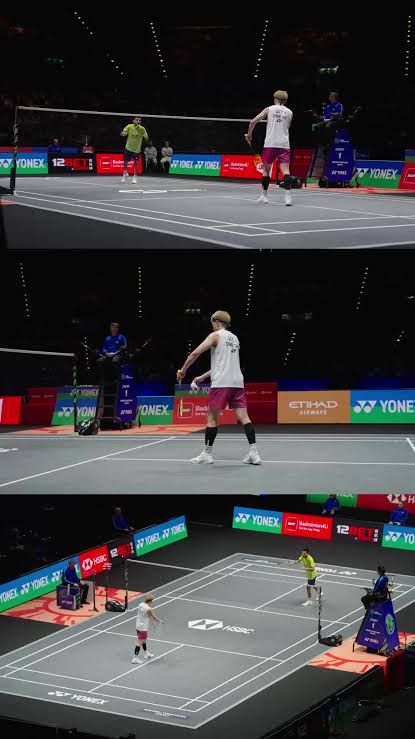
One of the most important considerations when choosing a badminton court colour is making sure players can see the shuttlecock clearly.
A feather shuttlecock is predominantly white, and it travels at extremely high speeds. Players need to track it throughout its flight, whether it is rising towards the ceiling, dropping towards the net or travelling across the court during a fast rally.
Darker court colours, such as green and blue, provide a useful contrast against the white shuttlecock. This makes it easier to follow its movement.
The surrounding environment matters too. BWF facility recommendations advise against having white backgrounds behind the ends of the court, as they can make the shuttle difficult to see. Darker backgrounds are preferred.
In other words, choosing a court colour isn’t simply about appearance. Visibility is a major consideration.
Also Read: Feather vs Plastic Badminton Shuttlecocks: Which Is Better For You?
2. Why are green and blue the most common colours?
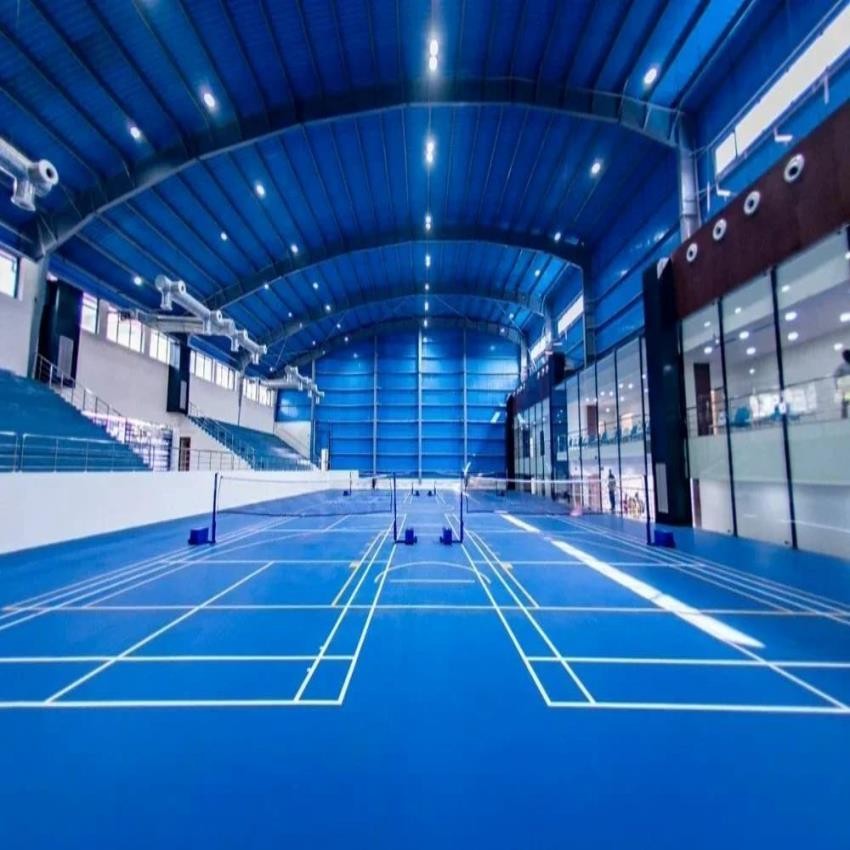
Green and blue have become familiar colours in professional badminton, particularly at major international tournaments.
Both can provide good contrast against a white shuttlecock, provided the shade is chosen appropriately.
Green has a long association with traditional indoor badminton courts, while blue has become particularly popular in modern tournament settings.
However, neither colour is universally compulsory. The important consideration is that the playing surface meets the relevant technical requirements and that the court markings remain clearly visible.
The Badminton World Federation focuses on the suitability and performance of the playing surface rather than requiring every tournament to use one particular colour.
3. So, why do some tournaments use red courts?
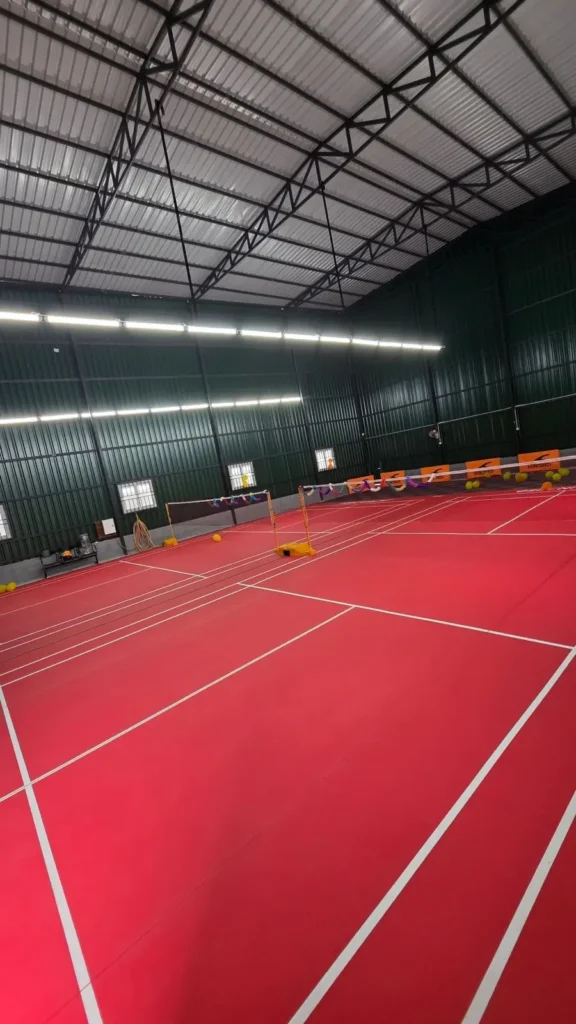
Red courts are less common, but they have appeared at major badminton competitions.
One notable example was the 2018 BWF World Tour Finals in Guangzhou, China. The tournament featured eye-catching red court mats instead of the more familiar blue surfaces.
The change attracted attention, and some players raised concerns about the playing conditions.
BWF clarified that there was no regulation prohibiting red court mats. The relevant requirement was that the court lines should contrast with the surface. It also explained that court approval was based on technical requirements rather than colour alone.
This is an important distinction: a court can look unusual without necessarily being unsuitable for professional badminton.
Red, therefore, is not automatically against the rules.
4. Does court colour affect how the game is played?
Colour itself doesn’t determine how fast or slow a badminton court plays. What matters much more is the quality and construction of the flooring.
Professional badminton courts use specialised surfaces designed to provide appropriate grip, shock absorption and playing characteristics. Players need to move, stop, jump and change direction safely.
A court that is too slippery can increase the risk of falls, while an unsuitable surface can make movement uncomfortable and potentially increase injury risk.
The finish matters as well. Badminton England’s facility guidance recommends a matt finish to avoid glare, with green, blue and natural timber among its preferred colours.
So, while colour can influence visibility, the surface underneath is far more important for a player’s movement and safety.
5. Do court colours also matter for television?
Absolutely.
Professional badminton is watched by millions of people around the world, and the visual presentation of a tournament matters.
A distinctive court colour can help create a recognisable tournament identity. It can also make the playing area stand out on television and in photographs.
Organisers may consider the overall appearance of the venue, including court colours, advertising boards, lighting and player uniforms.
However, these presentation choices still need to work alongside the practical requirements of the sport. A visually attractive court is of little use if players struggle to track the shuttlecock or move safely.
Final Thoughts
Badminton courts come in different colours because the sport doesn’t require every playing surface to look identical.
Green and blue are popular because they offer useful contrast against the white shuttlecock, while red and other colours can also be used when the relevant requirements are met.
Ultimately, the most important things aren’t whether a court is green, blue or red, but whether it provides good visibility, clear markings, suitable grip and a safe playing surface.
Read Next: Top 10 Badminton Strings for Every Playing Style: Which String Should You Use?


Discussion
0 CommentsShare your thoughts — every perspective adds value.