
A year ago, if someone had told me that badminton rackets would start tracking smash power, shot selection and match performance, I would have probably put it in the “cool idea, maybe one day” category.
Today, it’s already happening.
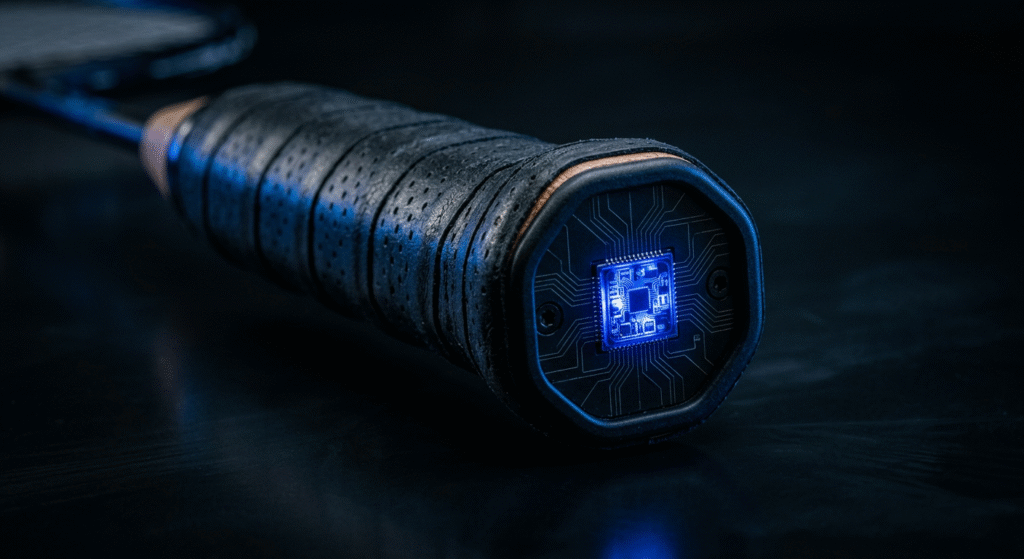
Victor is currently testing something called “Victor Intelligence”, a small chip hidden inside the racket handle that can collect data about how you play.
Read more: Smart badminton rackets are no longer an idea, they’re already here!
And honestly, I think we’re at a pretty interesting moment for the sport. Because this isn’t really about one racket, it’s about whether badminton is about to become a data-driven sport.
Badminton has always relied on feel
Think about how most players evaluate themselves after a match.
“My smashes felt weak today.”
“I think I made too many mistakes.”
“I was probably tired in the third game.”
The keyword is “think.”
A lot of badminton improvement is based on feeling rather than evidence. Coaches observe. Players remember. Everyone makes assumptions.
Sometimes those assumptions are right. Sometimes they aren’t.
Now imagine finishing a match and seeing something like:
- Smash power dropped 15% in the deciding game.
- You played 42% more clears than usual.
- Most of your errors came from the forehand side.
Suddenly, improvement becomes a lot less subjective. That’s what makes smart rackets interesting.
Not because they’re flashy. Because they make invisible things visible.
Badminton is surprisingly behind
When you look at other sports, data is everywhere. Professional football teams track player movement. Tennis has experimented with smart rackets for years. Runners analyse pace, heart rate and stride length after every session.
Badminton, despite being one of the fastest sports in the world, still depends heavily on coaching experience and player intuition.
There’s nothing wrong with that. In fact, intuition is one of the reasons badminton is so beautiful to watch. But it does mean there’s a huge amount of performance data we’ve never really had access to.
And that’s exactly the gap companies are trying to fill.
But let’s not pretend there aren’t problems
The technology sounds exciting but the reality might be more complicated.
First, weight matters.
Badminton players are incredibly sensitive to racket feel. Even a small change in balance can make a racket feel completely different.
If the technology affects performance, serious players won’t use it.
Second, durability.
Rackets clash. People mishit. Equipment gets thrown into bags and carried around daily. A smart racket has to survive real badminton, not just ideal conditions.
And then there’s the biggest challenge of all.
Price.
If smart rackets end up costing significantly more than premium rackets already do, adoption becomes difficult.
Most players won’t spend extra money unless the benefits are obvious.
The part nobody is talking about
Here’s the thing that interests me most.
What if too much data becomes a bad thing? Sports are full of examples where players become obsessed with numbers. Badminton is still a game of instinct, decision-making and feel.
Nobody wants players checking graphs after every game and forgetting to actually enjoy playing. There’s a difference between using data and becoming dependent on it.
The best version of this technology should help players understand their game better. Not turn every club session into a statistics project.
So, gimmick or future?
Right now, I think it’s a bit of both.
For most players, smart badminton rackets are probably more interesting than necessary. You can become an excellent player without ever seeing a single performance graph.
But that’s also what people said about smartwatches. And fitness trackers. And sports watches.
Most technologies look unnecessary before they become normal.
Will every badminton player own a smart racket in ten years? Maybe not.
But if companies like Victor are already investing in this space, it feels unlikely that this is where the story ends. The bigger question isn’t whether smart badminton technology will improve. It almost certainly will.
The real question is whether players are ready to let their rackets know more about their game than they do. And honestly, I think we’re about to find out 🙂
Stay updated with breath badminton, follow us on Instagram and YouTube.
Read Next: What Makes Left-Handed Badminton Players So Lethal?