
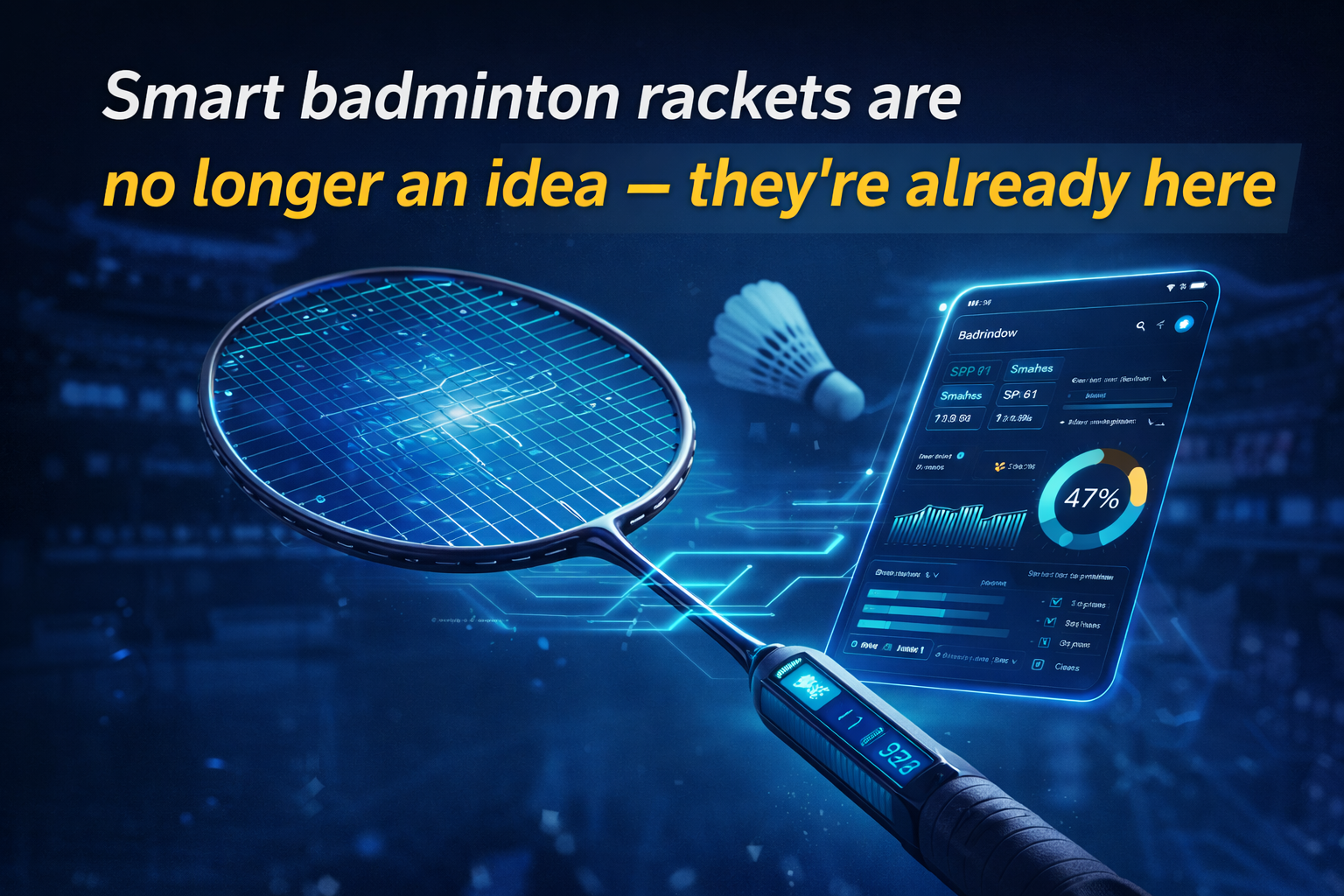

Victor is currently testing something called “Victor Intelligence”.
A while ago, I wrote about what a smart badminton racket could look like.
At that time, it felt like one of those “cool but far away” ideas. Like yeah, maybe in 5–10 years.
Not anymore.
Because recently, at a major Victor event in China, something interesting showed up. Not a concept, not a research paper, but an actual working system!
And if this goes where it’s heading, badminton might quietly be entering a different era.
So what exactly did they build?
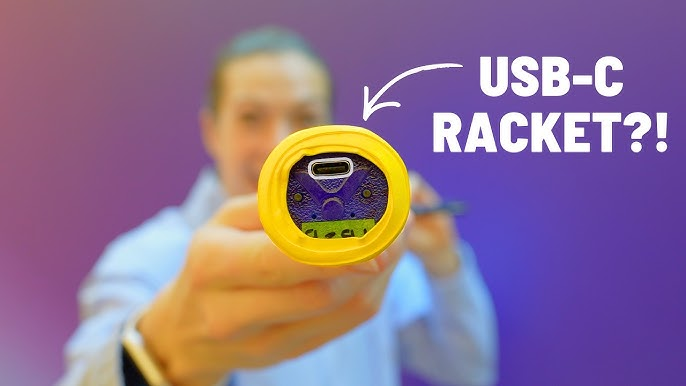
Victor is currently testing something called “Victor Intelligence”. Badminton Insight recently featured it in their video, Is this the future of Badminton
It’s basically a small chip placed inside the handle (end cap) of the racket. Nothing bulky, nothing dramatic, you wouldn’t even notice it unless someone pointed it out.
But what it does is where things get serious.
This chip connects to your phone and tracks:
- Smash power
- Shot distribution (how many smashes, drops, clears)
- Performance changes during a match
- Data across multiple sessions
So instead of just feeling like your smashes got weaker in the third game…
you’ll actually see it.
And that’s a big shift.
This is where it becomes interesting
We’ve always relied on:
- “I think I played well”
- “My smashes felt slower today”
- “My stamina dropped”
Now imagine replacing that with:
“Your smash power dropped 18% after rally 42.”
Now, how cool is that to know! Also, awareness changes how people train.
It’s basically a coach without saying it is
Right now, it’s just tracking.
But let’s not pretend this is where it stops.
Once you have enough data, the next obvious step is:
- Pattern detection
- Technique feedback
- Shot correction
At that point, your racket isn’t just recording your game.
It’s understanding it.
Badminton has been behind in this, until now
Other sports are already deep into this space.
- Tennis has smart rackets
- Football uses tracking systems
- Even running shoes give performance metrics
Badminton? Mostly guesswork and coaching experience.
That might start changing.
But let’s slow down a bit
Before we start calling this revolutionary, there are real questions:
1. Weight
Even a few extra grams matter in badminton.
If players feel a difference, this won’t survive at the top level.
2. Durability
Clashes happen. A lot.
What happens to the chip then?
3. Price
If this pushes rackets into the $400-500 (₹30–40K) range…
most players are out.
Also, not everything needs to be “smart”…
This is where I’ll push back a bit.
Badminton is still a feel-based sport. Timing, touch, instinct; these don’t come from data.
If players start relying too much on numbers, there’s a risk:
You stop playing the game… and start analyzing it mid-match.
That’s not always a good thing.
But still… this is a shift 🙂
Whether you like it or not, this is how sports evolve.
First, it looks unnecessary.
Then it looks useful.
Then it becomes normal.
Smartwatches were like that. Now almost everyone uses one.
This could follow the same path.
The bigger picture
This isn’t just about one racket or one brand. It’s about direction.
If companies like Victor are investing in this, others will follow.
And once competition enters:
- Tech improves
- Prices drop
- Adoption increases
That’s when things really change.
So, what does the future actually look like?
Not sci-fi.
Not AI shouting instructions mid-rally.
More like:
- Subtle tracking
- Post-match insights
- Long-term performance data
Quiet improvements, not loud ones.
Final thought
A year ago, this was an idea. Today, it’s in testing.
Tomorrow? Probably in someone’s bag at your local court. And that’s when things really change.
Stay updated with breath badminton, follow us on Instagram and YouTube.
Read next, Players share mixed reactions to proposed 15-point badminton scoring system


Discussion
0 CommentsShare your thoughts — every perspective adds value.